
What Is a Decentralized VPN (dVPN) and Why Does It Matter?
- No single company server to block, seize, or log.
- 7,500+ residential IPs across 100+ countries, from independent node operators.
- Built on open-source, decentralized infrastructure.


What Is a Decentralized VPN?
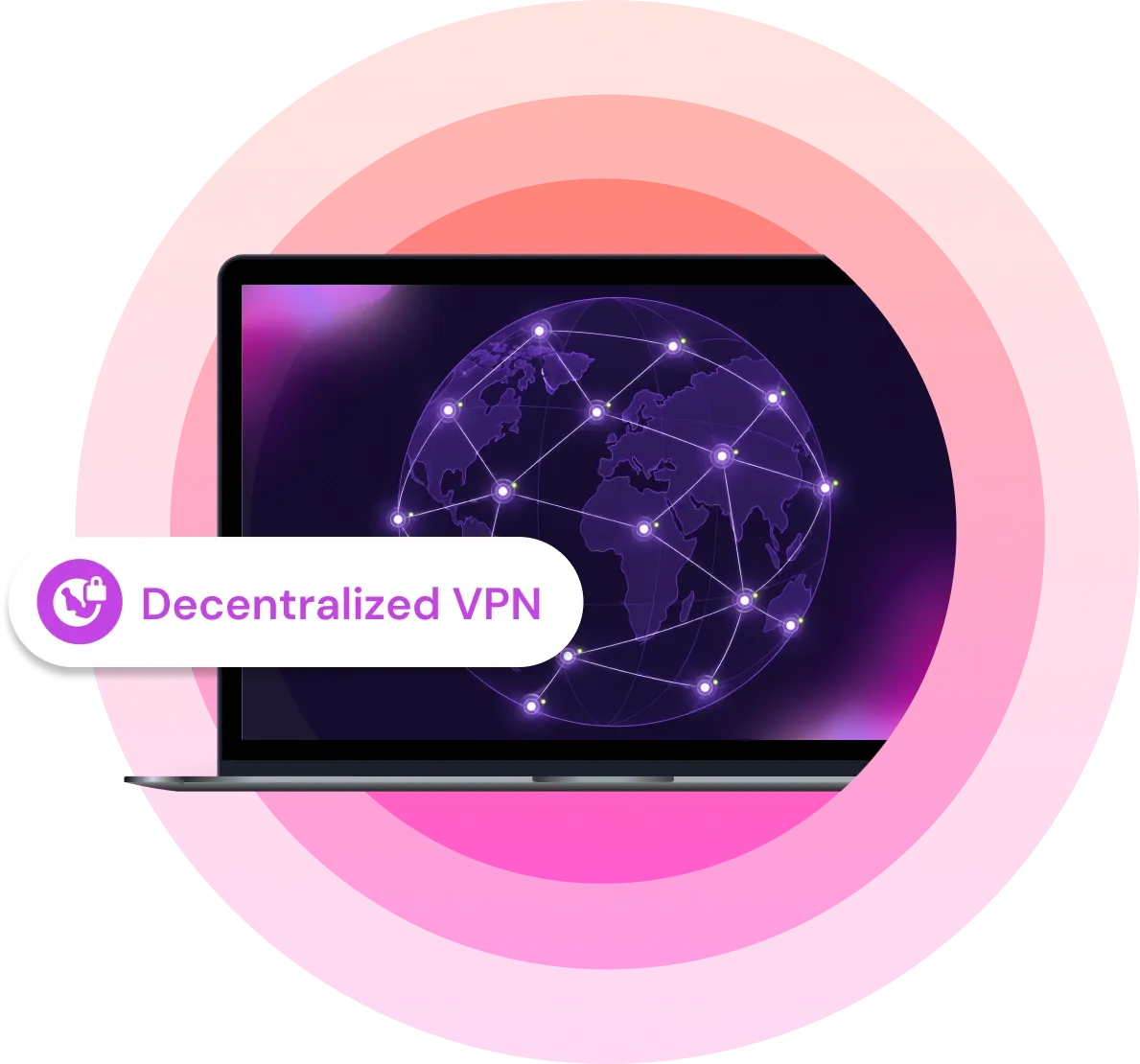
A decentralized VPN routes your traffic through a peer-to-peer network of independent user nodes instead of a single provider's servers. This removes the single point of failure and the need to trust one company with your data. Each node assigns you a real IP, so it helps you understand what a residential IP address is.
Key Features of a Decentralized VPN

Community-Powered
Independent operators run the nodes and share their bandwidth. No single company owns the infrastructure.

No Single Authority
Nodes are distributed across independent operators, so no single entity can be pressured into handing over user data.

Residential IPs by Default
Traffic exits through real ISP-assigned residential VPN addresses, not commercial datacenter ranges.
How Mysterium VPN's Decentralized Network Works

Node operators join
Independent users run Mysterium VPN nodes, sharing bandwidth from their residential connections.

Traffic is routed
Your connection routes through one of these independent nodes, not a server Mysterium VPN owns or controls.

You get a residential IP
Your exit IP is a real ISP-assigned address tied to a real household, not a known VPN datacenter range.
More Than a VPN
We Started with a Problem, Not a Product
We built the first decentralized VPN in 2019, learned where that model broke, and rebuilt around what actually works in daily use rather than in theory.
Freedom Is the Point
We treat open internet access as a human right, not a premium feature. Everything in the product follows from that, including the parts that cost us more to run.
We Hand Over the Controls
11,000+ IPs, 100+ countries, state-level choice in the US. We give you context and options. What you do with them is up to you.

Built with a Community
Our 7,500+ residential IPs come from independent node operators who explicitly agreed to take part. Using Mysterium VPN never makes your own device part of the network.

Open to Inspection
Our app code is public, and we're a member of the VPN Trust Initiative. Privacy claims should be checkable, not taken on blind faith.

We Watch What's Coming
Detection methods change, restrictions spread, rules get rewritten. We track it and keep the network working, so your internet stays usable without you having to actively follow any of it.
dVPN vs Regular VPN: What's the Difference?
Traditional VPNs route traffic through servers that one company operates and controls. Decentralized VPNs distribute that infrastructure across independent node operators worldwide.
| Criteria | Regular VPN | Mysterium VPN |
| Infrastructure | Single provider's servers | Community-operated peer-to-peer nodes |
| IP type | Datacenter IP | Residential ISP-assigned IP |
| Single point of failure | Yes – one provider | No – distributed across independent nodes |
| Trust required | Trust the VPN provider | No single entity controls all traffic |
| Speed | Consistent – optimized servers | Variable – depends on node operator bandwidth |
| Maturity | Established | Decentralized VPN technology is still maturing |
For a closer look, see our breakdown of residential vs datacenter VPN.
Reviews of Mysterium VPN








Download Mysterium VPN






Frequently Asked Questions
Reclaim the internet that took you at your word!