Why Are Residential VPNs More Expensive Than Regular VPNs?

Key Takeaways
Residential VPNs cost more because real ISP-assigned IPs are scarce and expensive to source.
Datacenter VPNs scale cheaply, while residential networks need real household connections and active management.
Mysterium VPN uses a decentralized network of residential IPs – not rented server racks.
The price premium reflects infrastructure cost, not just margin – you pay for IP quality.
Mysterium VPN Plus starts at $2.29/mo with 7,500+ genuine residential IPs.
The Short Answer
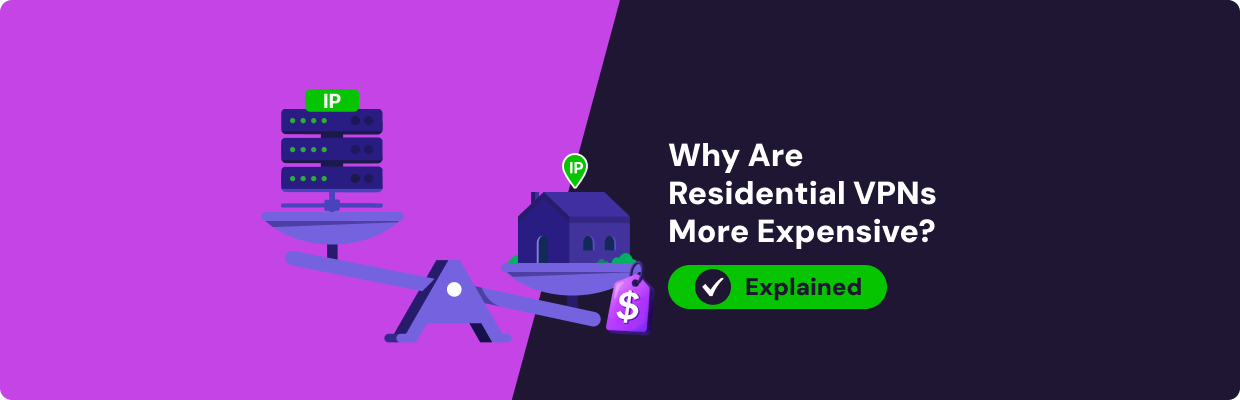
Residential VPNs cost more than standard VPNs because the underlying IP addresses are fundamentally different to source and maintain. A datacenter VPN leases server space and assigns IPs in bulk, which is cheap, scalable, and fast to provision.
A residential VPN needs real IP addresses assigned by ISPs to actual household connections, and those are scarce, expensive to access at scale, and require ongoing management. The price reflects the infrastructure rather than the margin, and the full residential VPN cost guide covers what that works out to in practice.
Four Reasons Residential IPs Cost More
The cost difference between datacenter and residential VPNs comes down to four structural factors. Each one adds expense that has no equivalent in datacenter infrastructure.
Sourcing: Real ISP Addresses vs Rented Server Space
Standard VPNs lease bulk server capacity from data centers, and the IP addresses come bundled with the server. Residential IPs must come from actual ISP subscriber connections, either through direct leasing agreements with ISPs or through a network of node operators who share their home bandwidth. Neither route is as simple or as cheap as provisioning another server, and neither can be done in an afternoon.
Scalability: You Can't Just Buy More Servers
Datacenter VPN capacity scales with money: rent more servers, get more IPs. Residential VPN capacity doesn't behave that way, because nobody manufactures residential IPs.
A provider has two options. Negotiate ISP block leases, which is expensive, slow, and geographically limited by whichever ISPs will deal. Or recruit more node operators, which is operationally intensive and never finished. Growth is slow either way, and unit costs don't fall with scale the way datacenter costs do.
Scarcity and Active Management
Residential and mobile IP addresses are a finite resource. Only so many ISP subscriber connections exist in a given city, and no amount of spending creates more.
Maintaining a residential pool means continuously monitoring IP reputation, rotating out addresses that have picked up flags, managing relationships with node operators, and keeping sourcing ethical. Datacenter IPs carry none of those maintenance costs, which is a major reason they're cheap.
Niche Utility Commands a Premium
Residential IPs behave like ordinary home internet traffic, which is the entire point. They're less likely to be flagged by platforms that block known VPN ranges – anti-bot systems, streaming services, booking sites – because the addresses sit outside the hosting ranges those systems filter on.
That property is genuinely hard to replicate, and providers price accordingly. It isn't gouging so much as a reflection of what the infrastructure costs to run, and the detailed residential vs regular VPN cost comparison shows how the gap plays out across plans.
How Mysterium VPN Sources Its Residential IPs
Mysterium VPN is built on a decentralized network to source its residential IPs.
The network runs on node operators: real people who share a portion of their home bandwidth and earn MYST tokens in return. That makes every IP address in the network a genuine ISP-assigned residential address rather than a leased data center block, and the residential VPN vs. data center distinction is the whole basis of the price difference.
It’s not a peer-to-peer connection. Mysterium VPN still operates a full tech platform, and it handles user plans, payment records, and data usage centrally. What's decentralized is the IP infrastructure itself – the exit points that determine which address your traffic appears to come from.
The result is 7,500+ residential IPs across 100+ countries, each with real ISP attribution behind it, as set out on the Mysterium VPN residential IP network page.
Is the Higher Price Worth It?
For most everyday privacy needs, a standard VPN is enough, and paying more won't buy you anything you'll notice.
The extra cost is worth it when your use case needs traffic that looks like ordinary home internet: booking sites that price dynamically by location, platforms that filter known datacenter ranges, or anything where IP reputation directly affects the result.
If that describes what you're doing, the premium is functional rather than cosmetic – and if it doesn't, it isn't. There's a full breakdown of when the extra cost is justified for the borderline cases, and current tiers are listed if you see Mysterium VPN plans.


Save up to 85% off for Black Friday!
The ultimate digital shield, now at a fraction of the cost.

Frequently Asked Questions
Gintarė is a cybersecurity writer at Mysterium VPN, where she explores online privacy, VPN technology, and the latest digital threats in editorial pieces. With hands-on experience researching and writing about data protection and digital freedom, Gintarė makes complex security topics accessible and actionable.
Related Articles